Overview
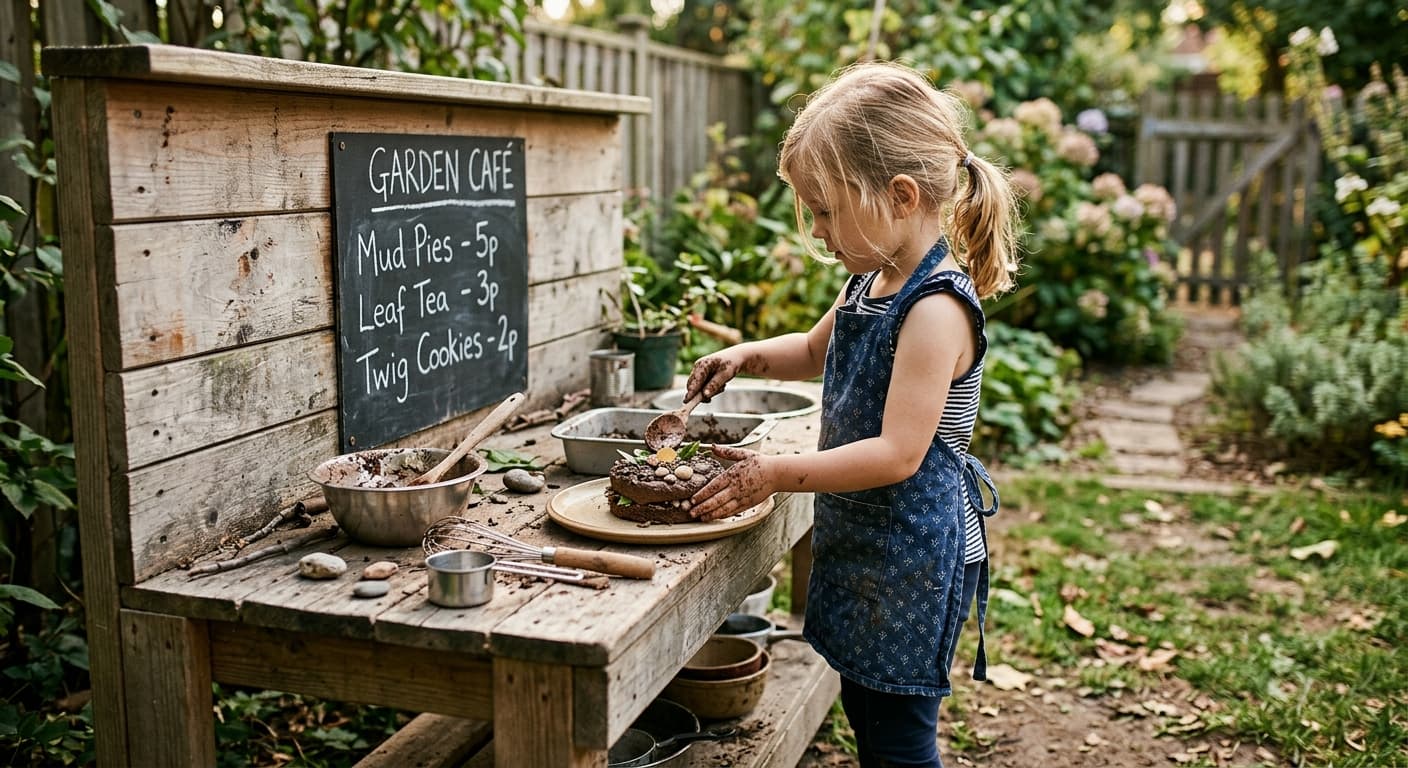
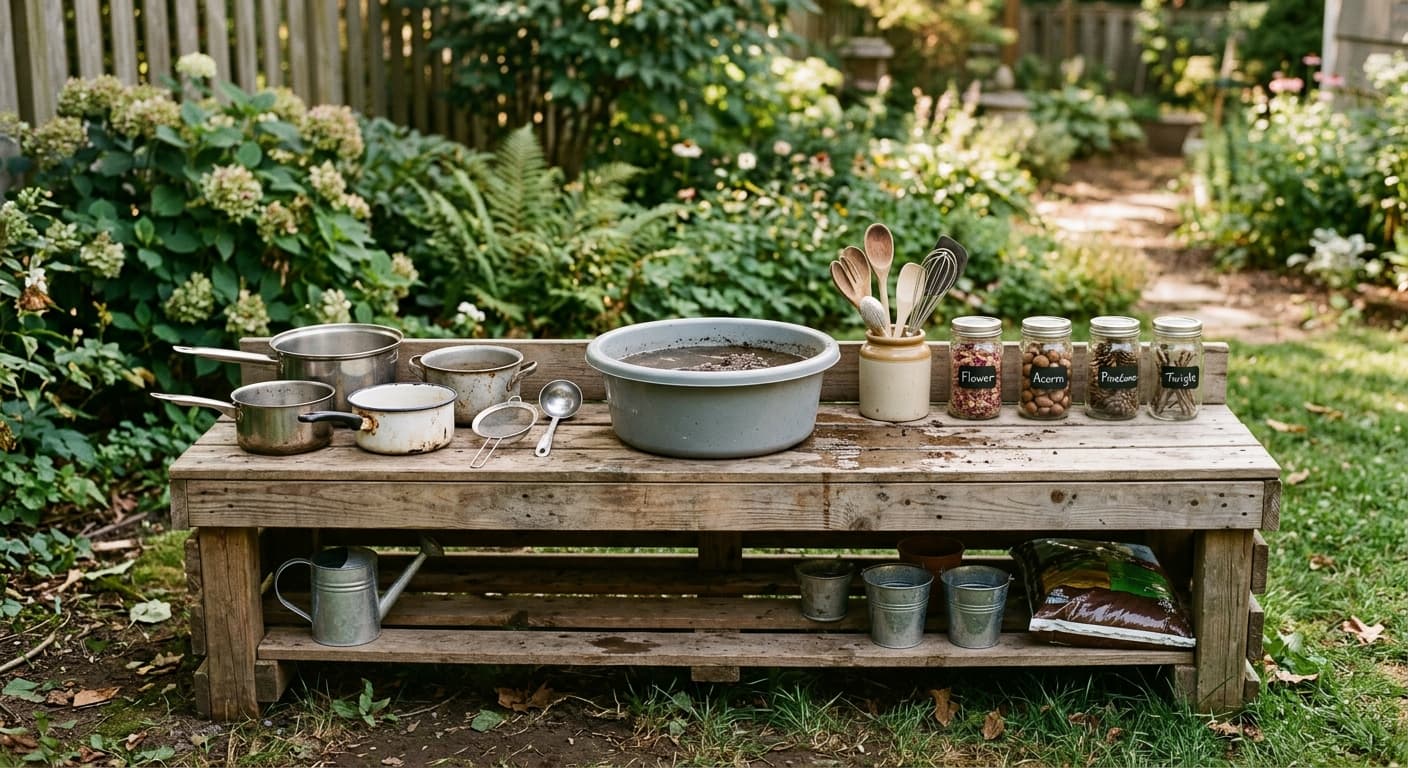
A mud kitchen is an outdoor counter with real pots and utensils, a "sink," a water source kids can control, and a supply of mud. Add jars of natural loose parts and a chalkboard menu and you have a station kids return to for years. It is high-ROI in the most literal sense: about 90 minutes to build, then 30 to 60 minutes of independent play every time, for seasons on end. You do not have to make it fancy or expensive. A pallet, a basin, a bag of topsoil, and a drawer of old spoons is a complete mud kitchen.
How to Do It
Step 1 — Pick the spot and the counter. Choose a spot near a wall or fence with some shade and a hose within 10 m. Set the counter at the child's elbow height: about 50 cm for a toddler, 60 cm for a preschooler. An old table, a pallet on edge, or two or three tree stumps all work. Put it on grass or bark, not the patio, where wet mud gets slippery.
Step 2 — Add the sink and a mixing area. Set a washing-up basin about 30 cm wide on the counter, or sink it into a cutout. Leave a clear 40 cm of flat counter beside it as the mixing and "stove" area. That is all the structure you need.
Step 3 — Set up water they can control. Stand a 10–20 L camping water container with a tap at counter height so kids fill their own pots without the hose running. Refill it once or twice a session. A watering can is the low-cost alternative. Kid-controlled water is the single biggest upgrade you can make.

Step 4 — Make the mud supply. Either dedicate a 50 cm patch of bare dirt as the digging area, or keep a 40 L tub of clean topsoil beside the counter. A 25 L bag of garden-centre topsoil runs about $5 and makes better, cleaner mud than random yard dirt. Kids add tap water to make mud on demand.

Step 5 — Stock pots, utensils, and scoops. Put out 4–6 pots and pans, a mixing bowl, 4–6 utensils (wooden spoons, a ladle, a whisk, a sieve, a potato masher), and 2–3 measuring cups. Stainless steel and wood last outdoors; thin plastic cracks. Five to eight tools is the sweet spot.
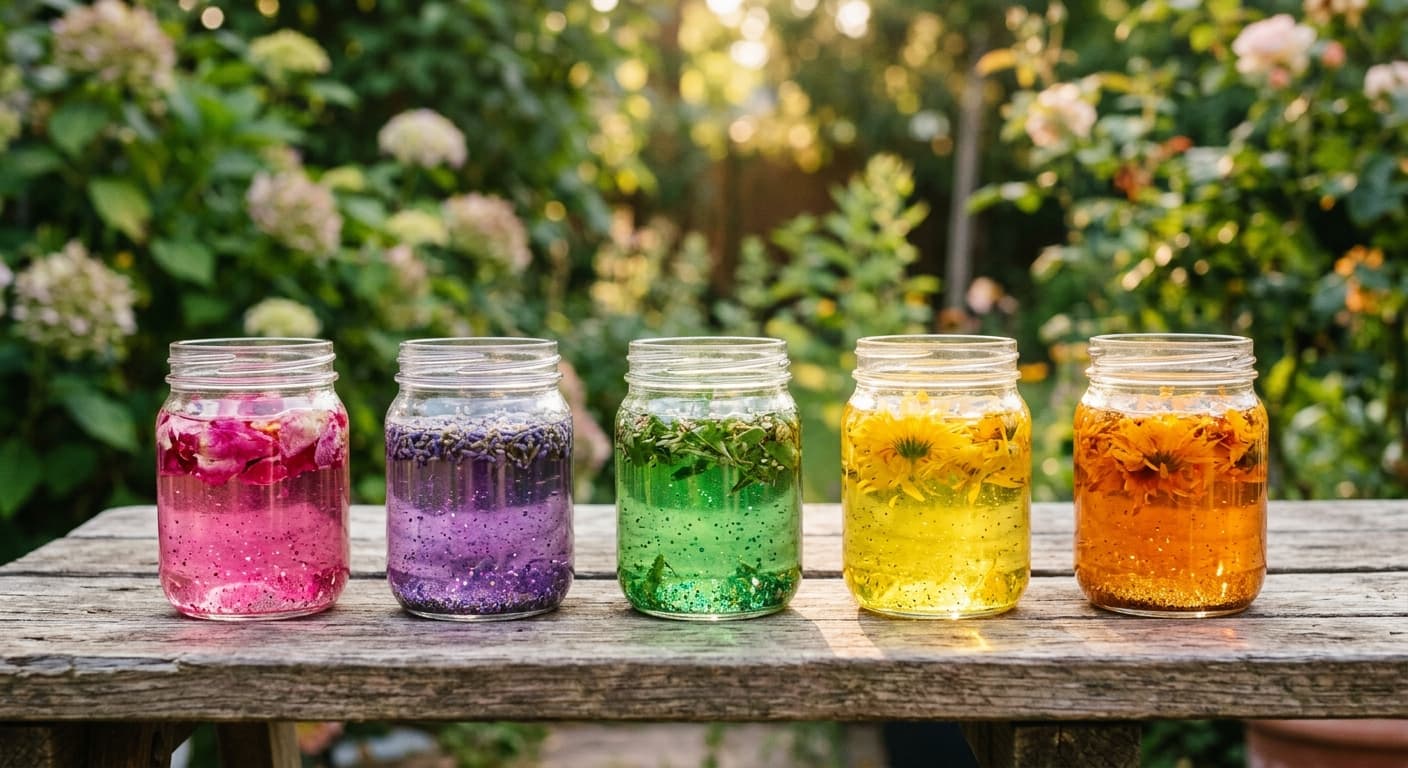
Step 6 — Add loose parts and a menu board. Fill 3–4 jars with petals, pinecones, acorns, pebbles, herbs, and leaves. Hang a small chalkboard for a menu. These are what turn plain mud-stirring into cooking, potions, and a cafe.
Loose Parts: What to Stock
| Item | Good for | Best season |
|---|---|---|
| Dried rose petals | Potions, decorating cakes | Spring–summer |
| Acorns and conkers | Pretend fruit, counting | Autumn |
| Pebbles and stones | Currency, pretend potatoes | Any |
| Fresh herbs (mint, rosemary) | Tea, grinding, smell | Spring–autumn |
| Leaves and grass | Salad, soup greens | Any |
| Pinecones and bark | Stirring, pretend food | Autumn–winter |
| Shells | Scoops, bowls, treasure | Any |
| Dried citrus slices | Scent, decoration | Any |
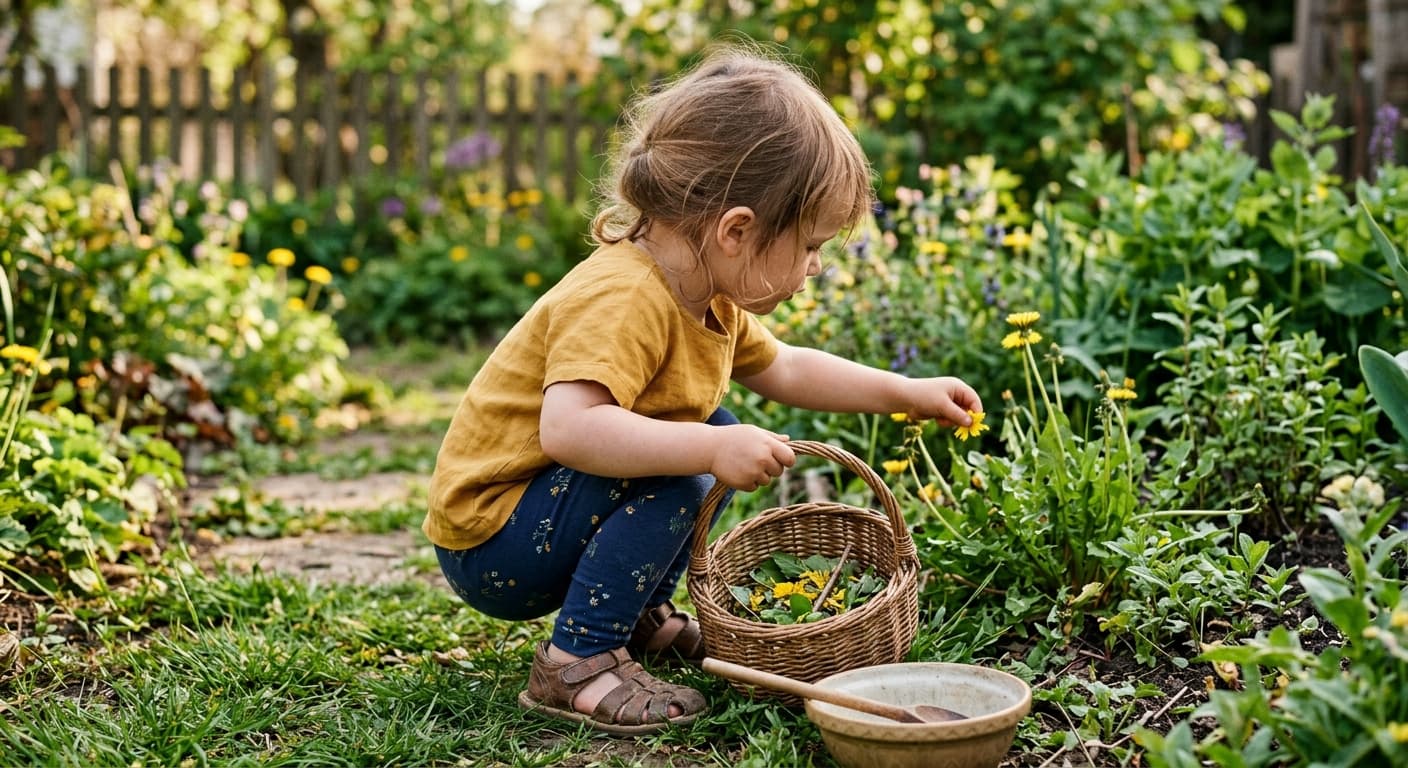
Forage these with your kid. Gathering them is half the fun and doubles as the first activity. Store them in labelled jars so the youngest kids can find what they want and ask for the kitchen independently.

Shopping List (Start Here)
| Item | Where | Est. Cost | Required |
|---|---|---|---|
| Topsoil (25 L bag) | Garden centre, hardware store | $5–$8 | Yes |
| Plastic washing-up basin | Dollar store, supermarket | $2–$5 | Yes |
| Pots, pans, utensils (secondhand) | Charity shop, kitchen drawer | $0–$15 | Yes |
| Camping water container with tap | Amazon, camping store | $15–$30 | Optional |
| Counter (pallet, stumps, table) | Free / reclaimed | $0–$30 | Optional |
| Mini chalkboard for menus | Craft store, Amazon | $5–$10 | Optional |
| Storage crate | Hardware store, dollar store | $5–$10 | Optional |
Bare minimum (dirt patch + basin + drawer tools): $0–$15. Fully kitted with a counter, water tap, and chalkboard: $35–$90. After that, loose parts are free from the yard.
Safety
Keep choking hazards in mind. Under about age 3, anything that fits through a toilet-paper tube is a risk. Use only large loose parts (big pinecones, large shells, whole stones), supervise closely, and add acorns and small petals once your child reliably stops mouthing objects. Mud itself is not taste-safe, so expect and block mouthing attempts with the youngest kids.
Skip any foraged plant you cannot confidently identify, and avoid local irritants like poison ivy and oak. Mud play is genuinely healthy for the immune system, but wash hands afterward, keep open cuts covered, and dump standing water at the end of each day so it does not stagnate. Never leave a toddler unattended near a full basin, even a shallow one.
Tips & Tricks
Set one rule from day one: mud and water stay in the kitchen area, not on the patio or up the back door. Kids learn this fast when you enforce it gently the first few times.
Dress for it. A splash suit or old waterproofs and rubber boots turn mud play from a laundry problem into a non-event, and a mud kitchen genuinely works year-round, not just in summer. Keep a towel and a wash bucket by the back door for the transition back inside.
Store the tools in a crate that lives under or beside the counter so setup is a 60-second job, not a hunt. When kids can find everything themselves, they ask for the kitchen on their own.
Cleanup
Tip pots out, rinse tools in the basin, and stand them in the storage crate to dry. Empty the sink basin and the water container at the end of the day. Wood utensils last longer if they dry out between sessions, but a season of weathering is expected and fine. Hose the kid down before they come inside, or run the "getting hosed off" as the final, favorite part of the game.
Troubleshooting
The mud is too dry or too sloppy. Mud is a ratio. Start with soil and add water a little at a time. Dry crumbly mud will not mold; soupy mud will not hold a shape. Let the kid learn the ratio, it is half the cognitive value.
Tools and toys disappear into the dirt. Use a brightly colored basin and crate, and do a 2-minute tool round-up as part of cleanup. Stainless steel will not be ruined by a night outside if one gets missed.
They lose interest fast. Hand them a mission: a recipe card, a menu to fill, an order to make. Novelty and a goal reset engagement faster than new tools. See the activity scenarios for ready-made missions.
Standing water keeps going green. Empty the basin and container daily. In hot weather, refill fresh each session rather than topping up yesterday's water.