Overview
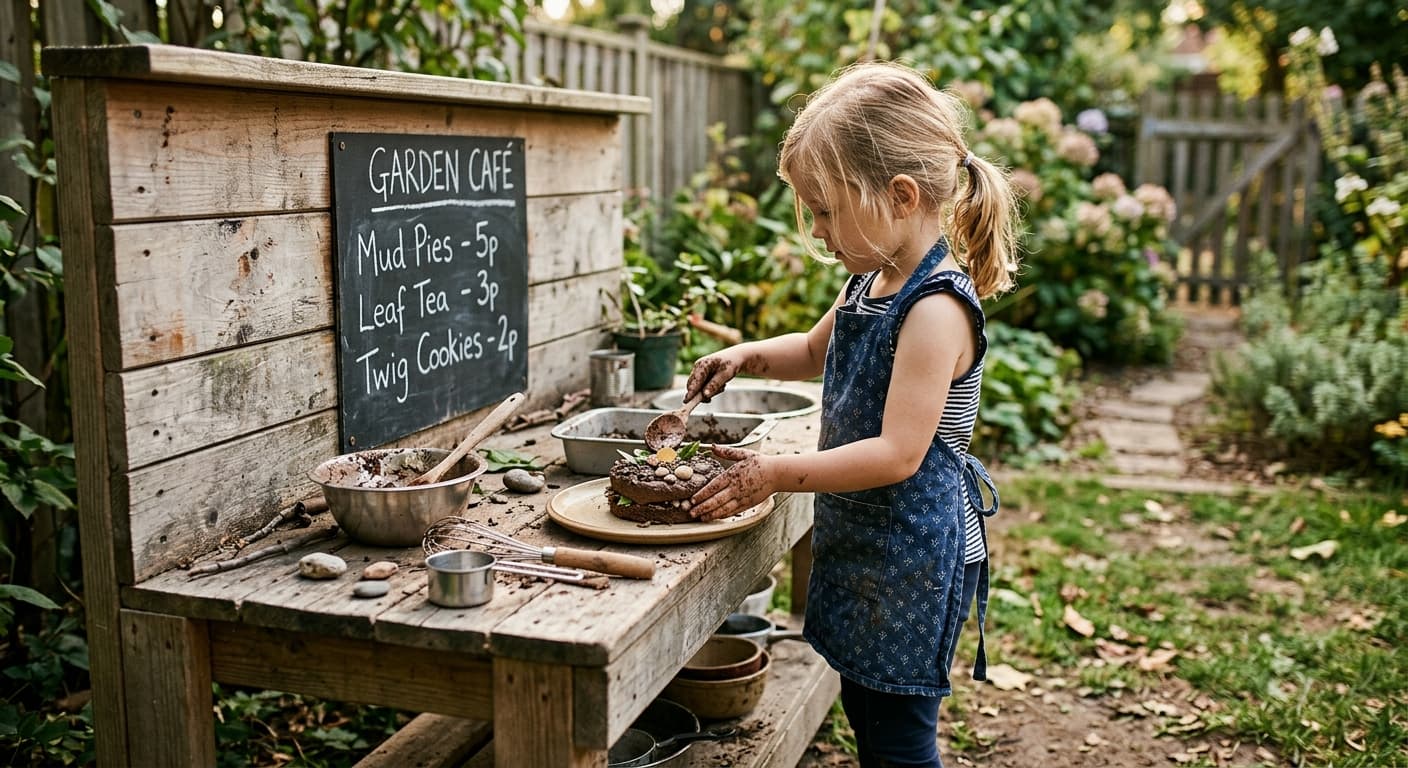
Hand a kid clear jars, pipettes, water, and a tray of petals and "fairy dust," and they become a potion-maker. This one leans into the cognitive side: mixing measured amounts, watching color spread, learning that two drops do something different from twenty. It runs 30 to 45 minutes and the pipette work is quiet, focused fine-motor practice the whole time.
How to Do It
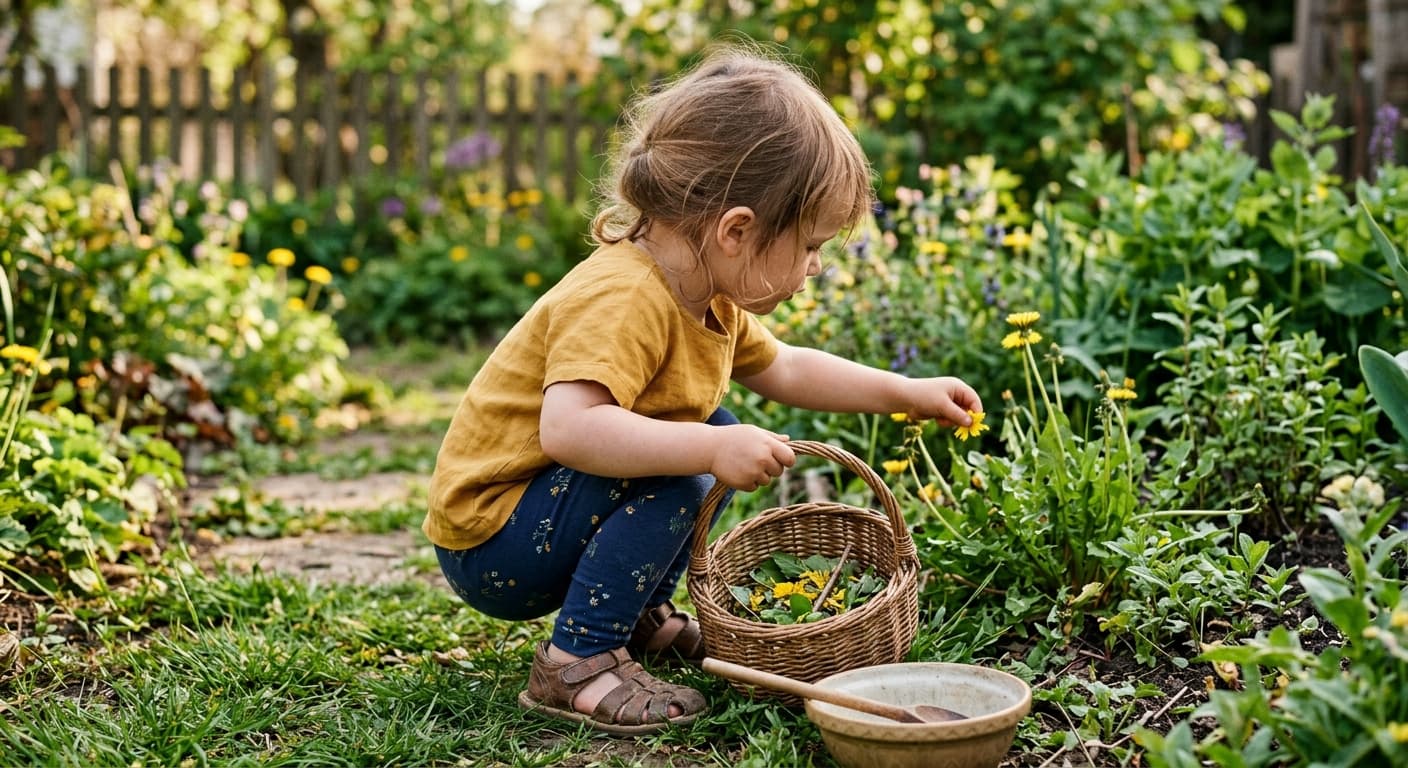
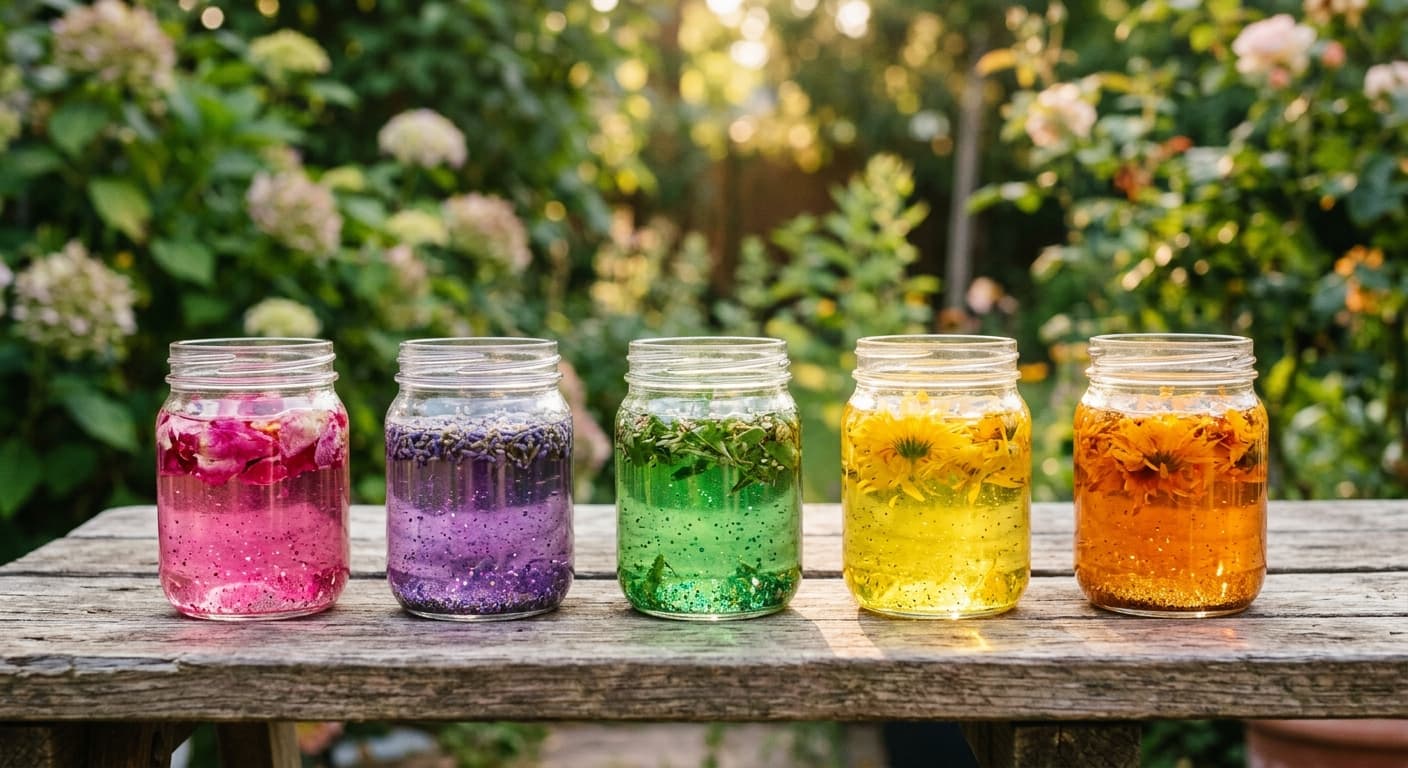
Set out 4–6 clear jars or bottles so kids can see what they are making. Put a pipette or syringe in each loose-part jar (petals, herbs, a pinch of glitter or pink rock salt as fairy dust). Fill the water container and set out a couple of funnels.
Give them the frame: they are inventing potions, and every potion needs a name and a recipe. That is the only instruction. Show one move, drawing water up the pipette and squeezing it into a jar, then step back. Kids naturally start measuring: "three drops of red, a spoon of petals, two pinches of dust." The cause-and-effect of color spreading through water and mud thickening with each scoop is the hook.

Drop in a question now and then when they are engaged: "What does that potion do?" or "How many drops did the last one take?" Then back off and let the lab run itself.
Tips & Tricks
Pipettes and syringes are the star tool here. A cheap pack of kid pipettes (or clean medicine syringes) draws kids in for 20 minutes of pure pincer-grip work. Keep two so a sibling can join.
A drop of food coloring in the water makes the science visible and the potions dramatic. Skip it if you would rather avoid stained hands.
Clear containers matter more than for any other mud-kitchen activity. Kids stay engaged when they can watch the layers, the swirl, and the settle.
Variations
Easier (ages 3–4): Pre-fill jars halfway with colored water. Let them just add petals and stir. Skip the pipettes if the grip is still developing and use scoops instead.
Harder (ages 6–9): Make it real science. Add a teaspoon of baking soda to a potion, then a squeeze of vinegar from a pipette, and watch it fizz and erupt. Ask them to write the recipe on the chalkboard so they can repeat the reaction exactly.
Color-mixing mission: Give them only red, yellow, and blue water and challenge them to make orange, green, and purple potions, measuring how many drops of each it takes.