Overview
Send them out with a basket to gather ingredients, then cook it all into a giant pot of nature soup. This one gets the body moving first, foraging across the yard, then settles into language and classification as they name, sort, and describe what they collected. It runs 30 to 45 minutes with a built-in active phase, which makes it a good pick when a kid has energy to burn before they will sit and stir.
How to Do It
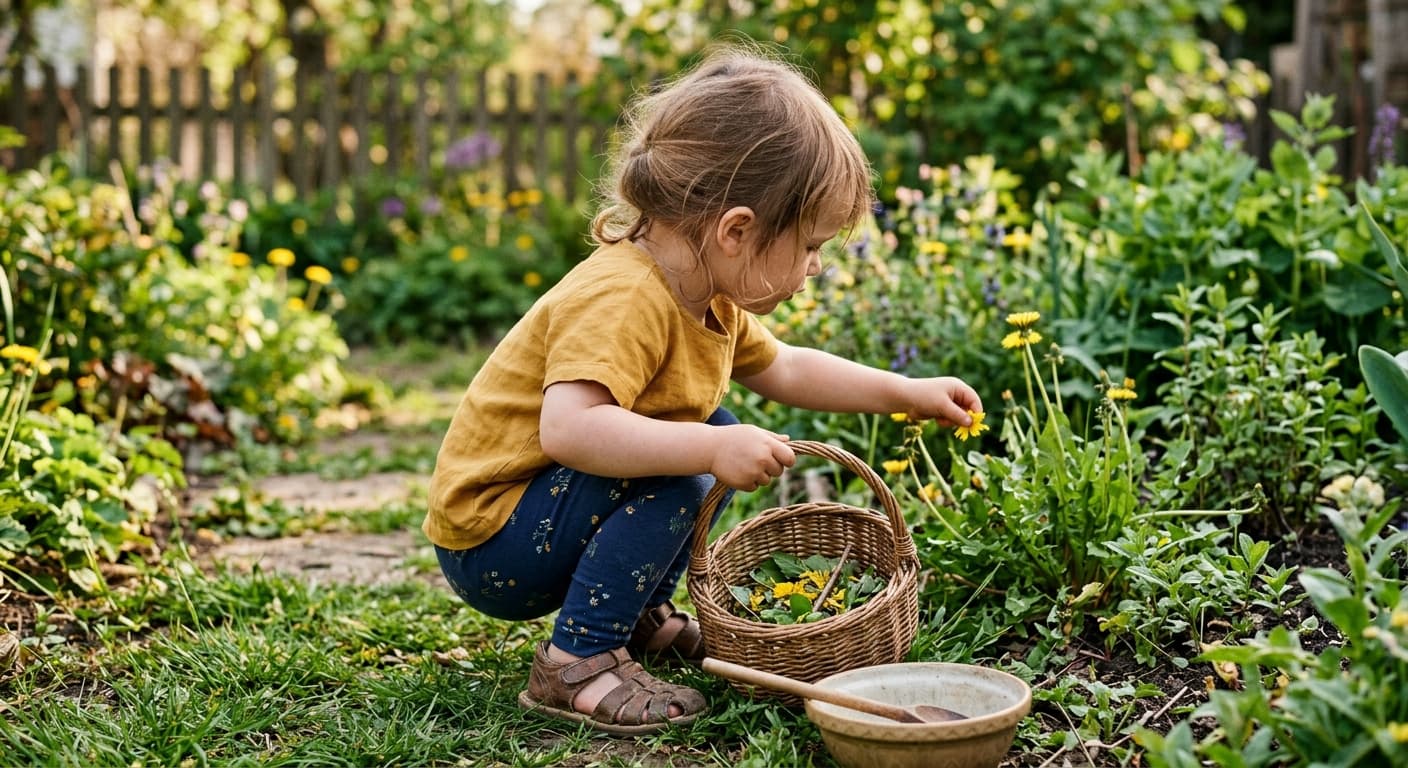
Hand them a basket and a mission: collect ingredients for today's soup. Set loose boundaries (the backyard, not the neighbor's flower beds) and let them roam, gathering leaves, grass, petals, herbs, pebbles, sticks, whatever they decide is food. The foraging is the gross-motor half: walking, reaching, crouching, carrying a loading basket.
Back at the kitchen, they fill the big stock pot with water and mud, then add and stir in everything they gathered, naming each one and saying what it is in the soup ("this grass is the noodles"). A pestle and mortar lets them grind herbs and release the smell, which adds a whole sensory layer. Use the sieve to strain "broth" from "bits."

When engaged, prompt the language and sorting: "What's in your soup? Which ones are the vegetables?" Then let them cook.
Tips & Tricks
Pick a yard with a couple of safe, smellable herbs (mint, rosemary) and the soup gets a real aromatic kick. Crushing herbs in a pestle is the sensory highlight, and it builds serious hand strength.
Give the foraging a target number to add a counting layer: "Find 5 different green things." It focuses the wandering and sneaks in classification.
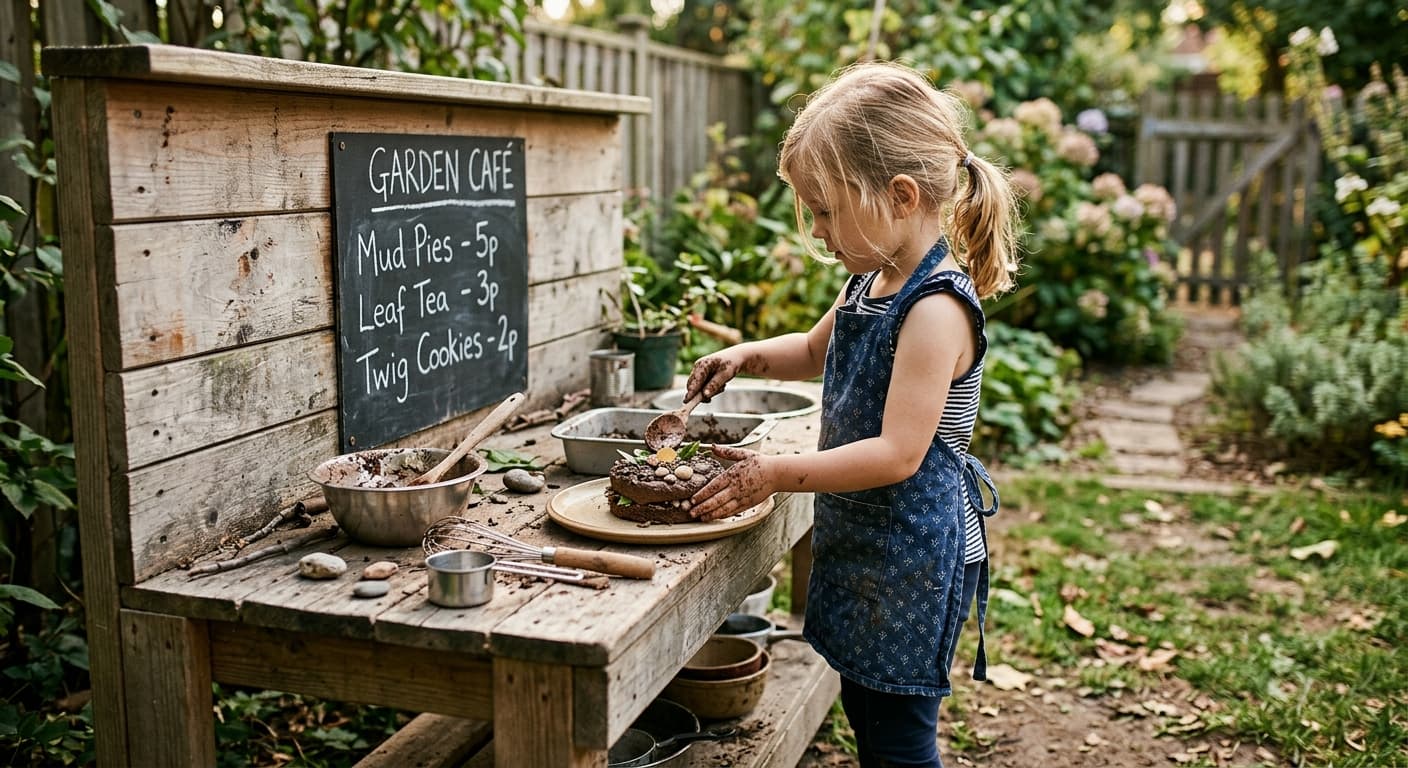
Keep the soup pot separate from the mud-pie tins so a kid can have a long-simmering "soup of the day" going while they do other dishes.
Variations
Easier (ages 2–3): Forage together, you carry the basket, and keep it to large safe items. Back at the pot, the whole activity is dropping things in and stirring. Name each item as it goes in to feed vocabulary.
Harder (ages 6–9): Add a sorting and recipe step: lay out everything gathered, classify it (leaves, seeds, flowers, stones), then write a soup recipe using only items from two categories. Introduce a "tasting" narration where they describe imagined flavors in detail.
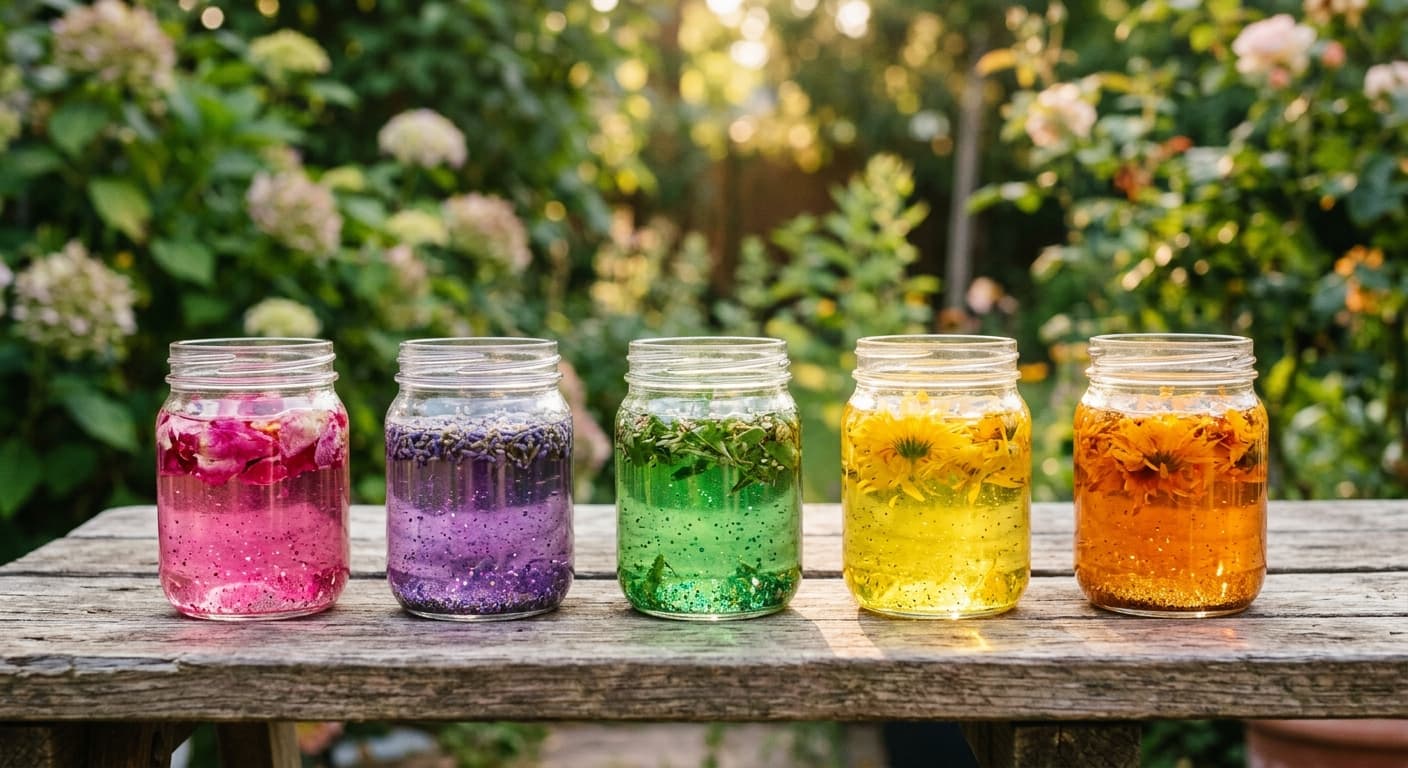
Herbal tea: Skip the mud. Collect petals and herbs, steep them in warm (not hot) water from the container, and "serve" tea. A calmer, lower-mess version of the same foraging game.