What a Mud Kitchen Actually Is
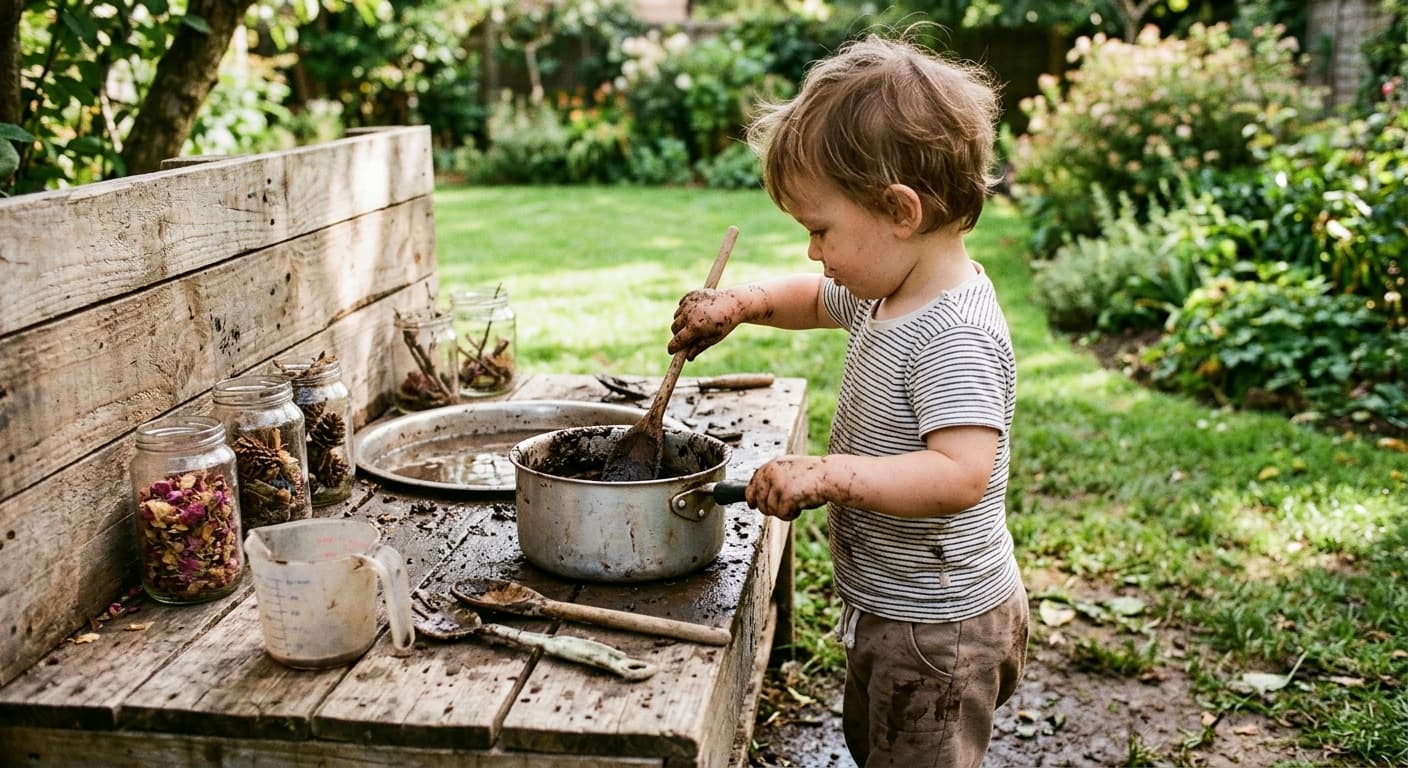
A mud kitchen is an outdoor play station, a counter or bench with real pots, pans, spoons, a water source, and a patch of dirt or a tub of soil to make mud. Add some natural loose parts (petals, pinecones, herbs) and the kit is complete. That is the whole concept. What earns it a permanent spot in the backyard is what happens once a kid's hands are in it: open-ended, self-directed cooking play that runs 30 to 60 minutes while you do something else nearby.
If you want the build instructions, see the setup guide. This page is the why.
Why It Works
A mud kitchen hits a lot of targets in one activity. The hands work the entire time: stirring, scooping, pouring, squelching mud, grinding herbs, drawing water through a pipette. The mind does early math without anyone calling it math, measuring scoops into a recipe, noticing the big pot holds more than the small one, watching dry dirt turn to mud the instant water hits it. Language shows up naturally as kids name ingredients, describe textures, and narrate the dish they are making. And because mud play is repetitive and messy in a place where mess is allowed, it tends to calm kids down and stretch their focus.
None of this needs a worksheet. The learning is a side effect of play the child actually wants to do. That is the appeal: it is genuinely fun, and the development comes along for free.
How It Grows With Your Kid
The same kitchen works from toddler to early elementary. You just change what you put out and how far you step back.

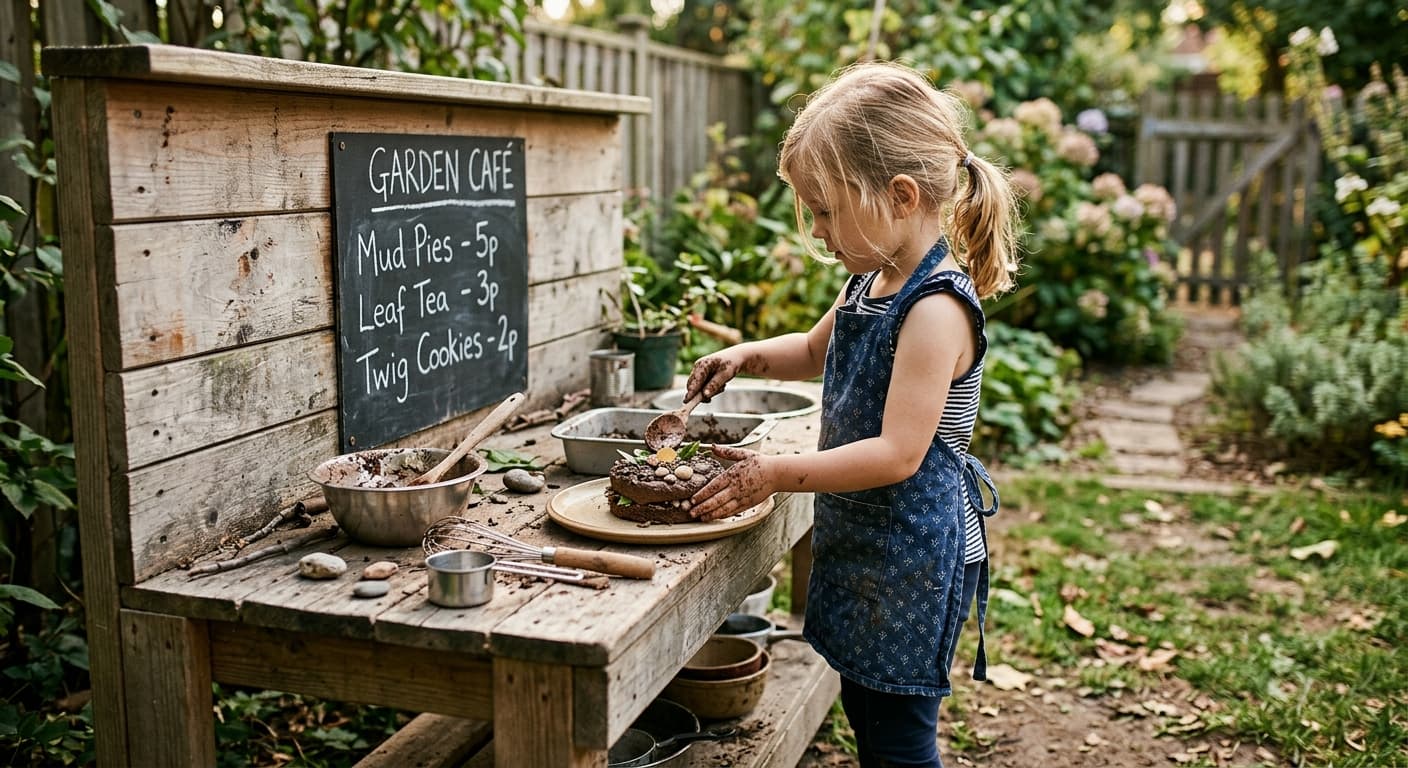
A toddler gets texture and cause-and-effect, supervised, with large pots and spoons and shallow water. A preschooler is in the sweet spot, measuring and pouring, following a simple recipe, and running long pretend-cooking scenarios with little redirection. An early-elementary kid wants structure: a real recipe to double, a cafe to run with pebble currency, a potion to engineer. Give them a chalkboard menu and a mission and the kitchen scales right up. A baby can join with constant supervision, but mud is not taste-safe, so expect mouthing attempts and keep loose parts large.
For Kids Who Process Sensory Input Differently
A mud kitchen is a strong tool for kids who crave heavy tactile input and for kids slowly building tolerance for it. The reason is control. Mud delivers rich, full-hand sensory input inside a space the child directs, outdoors, where the usual "don't make a mess" tension disappears. Exposure can be gradual: a child who dislikes the feel can start with only a spoon and a pot, never touching the mud directly, then build up at their own pace. The repetitive motion of stirring and pouring is regulating.
Worth saying plainly: this supports development, it is not therapy. Follow your kid's lead, and if a texture causes real distress, hand them tools instead of pushing bare hands.
Instead of a Screen
The honest comparison most parents are making is mud kitchen versus tablet. A screen is passive; the child watches. A mud kitchen is active; their own hands and imagination drive it. It is one of the few screen-free setups that holds a young kid's focus outdoors for a real stretch without you narrating every minute. You set it up once, you step back, and it carries itself for years.
Where to Go Next
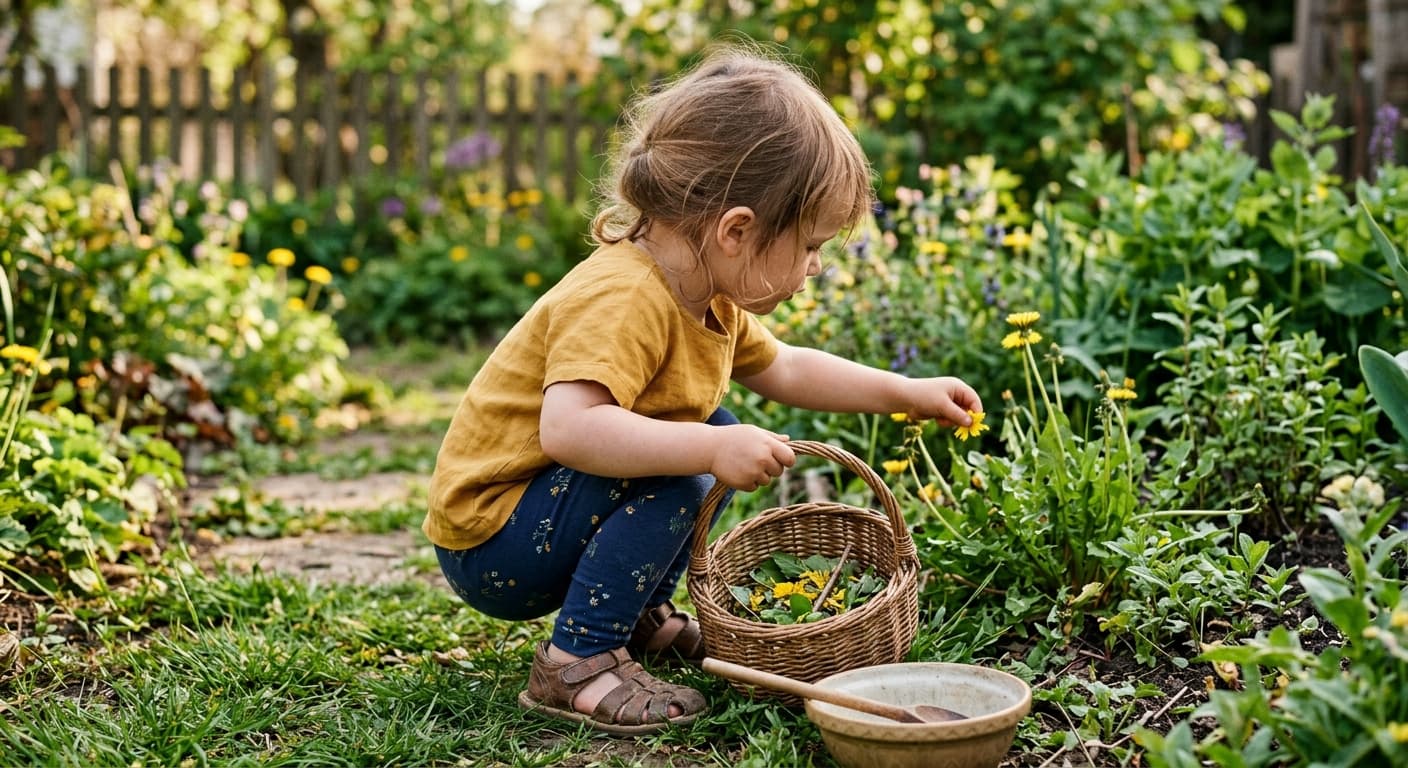
Build one with the setup guide, then pick a scenario: potion lab, mud pie bakery, storybook recipes, mud cafe and shop, or nature soup and foraging.