Overview
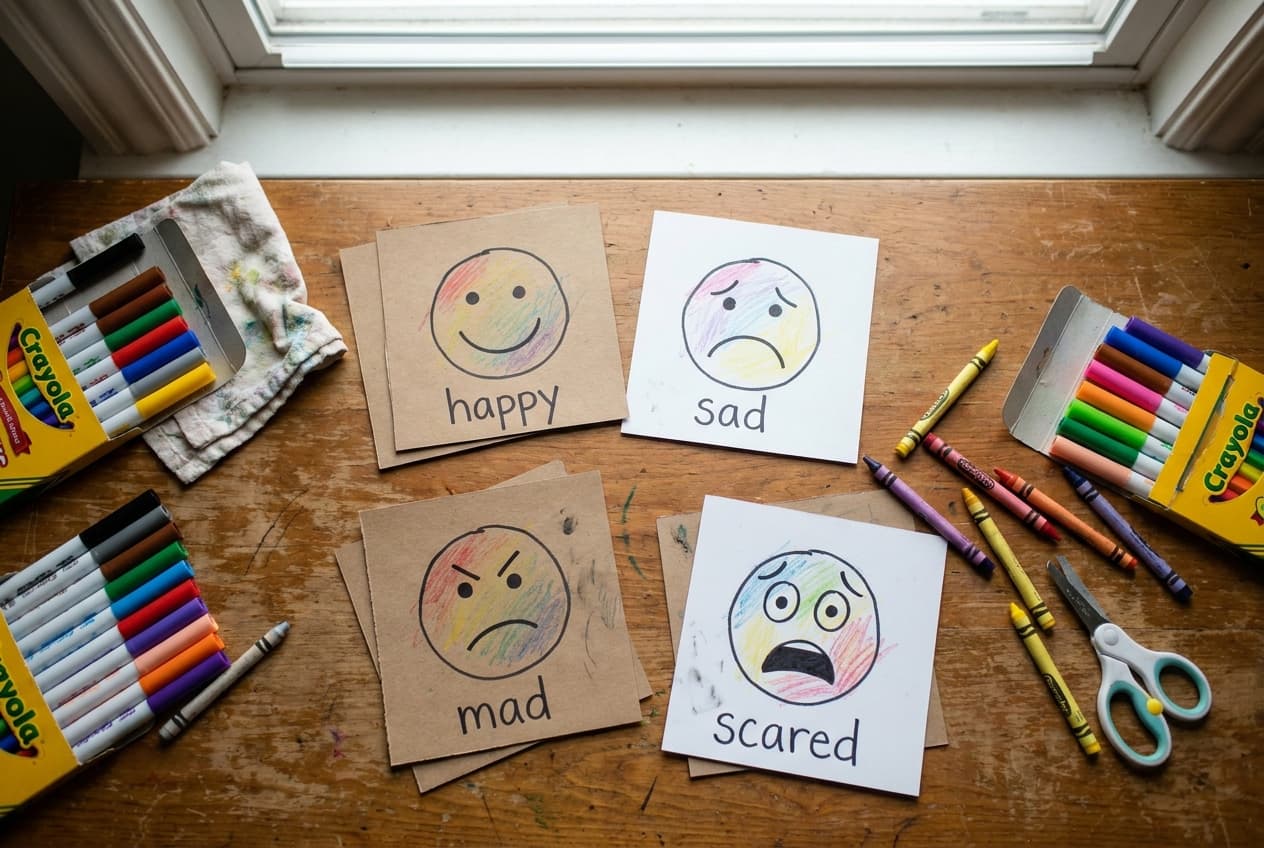
The whole infrastructure here is a deck of feeling cards. Make it once in about 20 minutes and it powers every activity in this family for years. You can also buy a deck and skip the making, or, the best of both, let your kid draw the faces so the deck is theirs. Twenty minutes of setup buys you months of five-minute games.
How to Do It
Step 1 — Pick your feelings list. Choose 12 to 16 feelings. Start with the four basics (happy, sad, mad, scared), add four to six mid-level feelings (silly, surprised, proud, shy, sleepy, excited), then four to six complex ones for older kids (frustrated, nervous, embarrassed, jealous, disappointed, calm). Use 6 cards for a toddler and 16 or more for an early-elementary kid.
Step 2 — Make the cards. Write one feeling word at the bottom of each index card and draw a simple face above it. One feeling per card, faces big and clear. Hand the drawing to your kid if they want it. Ownership is the difference between a deck that gets used and one that sits in a drawer.
Step 3 — Set the draw pile. Drop the finished cards face-down into a bag, jar, or hat so players draw blind. Blind draws kill the "I don't know which one to pick" stall and add a little suspense. For a non-reader, let them peek at the face and whisper the word to them.

Step 4 — Set one house rule. The actor never says the name of the feeling. Sounds, gibberish, and gestures are all fair game. That one rule is what turns the deck from a naming worksheet into an acting game.
Card Decks: What to Use
| Option | Cost | Best for |
|---|---|---|
| DIY drawn cards | $0-$5 | Most families; maximum kid ownership |
| DIY photo cards | $0-$10 | Kids who light up seeing themselves |
| Store-bought deck | $8-$16 | Starting tonight with zero prep |
DIY drawn cards are the default: cheapest, and your kid designing the faces is half the value. DIY photo cards work beautifully for kids who love seeing themselves; photograph each face and label the bottom, and you have instant flashcards. A store-bought deck (Todd Parr's Feeling Flashcards, eeboo's About Face, Melissa & Doug's Make-a-Face) gets you playing tonight with no prep and usually more feelings than you would draw by hand.
Shopping List (Start Here)
| Item | Where | Est. Cost | Required |
|---|---|---|---|
| Index cards or sticky notes | Grocery, dollar store, Amazon | $1-$4 | Yes |
| Markers or crayons | Likely at home | $0-$6 | Yes |
| Bag, jar, or hat to draw from | At home | $0 | Yes |
| Store-bought feelings deck | Target, bookstore, Amazon | $8-$16 | Optional |
| Instant/polaroid camera | At home or Amazon | $0-$70 | Optional |
Bare-minimum total: $0 if you have paper and markers. Fully kitted with a bought deck: $10-$20.
Safety
There is almost no physical risk here. For kids under 3, skip small loose pieces and keep marker caps away from mouthers. The real watch-point is emotional, not physical: keep the tone playful. If a card lands on a feeling your kid is genuinely sitting in that day, let them set it aside. The game works because it is pretend, so protect the pretend.
Tips & Tricks
Store the deck in its draw bag in a spot your kid can reach, so they can ask for the game by handing you the bag. Keep the deck small to start; you can always add cards as your kid's vocabulary grows. If you want the deck to grow with your kid, write new feelings on blank cards whenever a real one comes up in life ("that was disappointment, want to add it?").
Cleanup
Cards back in the bag, bag back on the shelf. The whole deck is reusable indefinitely. Replace any card that gets bent or scribbled past reading; that is a two-minute fix, not a reason to remake the deck.
Troubleshooting
Kids fight over who goes first. Draw for turn order, or let the youngest go first by default. Decide once and keep it.
A non-reader can't use the cards. Lean on the drawn faces and whisper the word, or use photo cards of their own expressions.
The deck feels stale. Swap in 4-6 new feelings, or move to a different activity in this family (freeze dance and sculpture use the same deck).


